
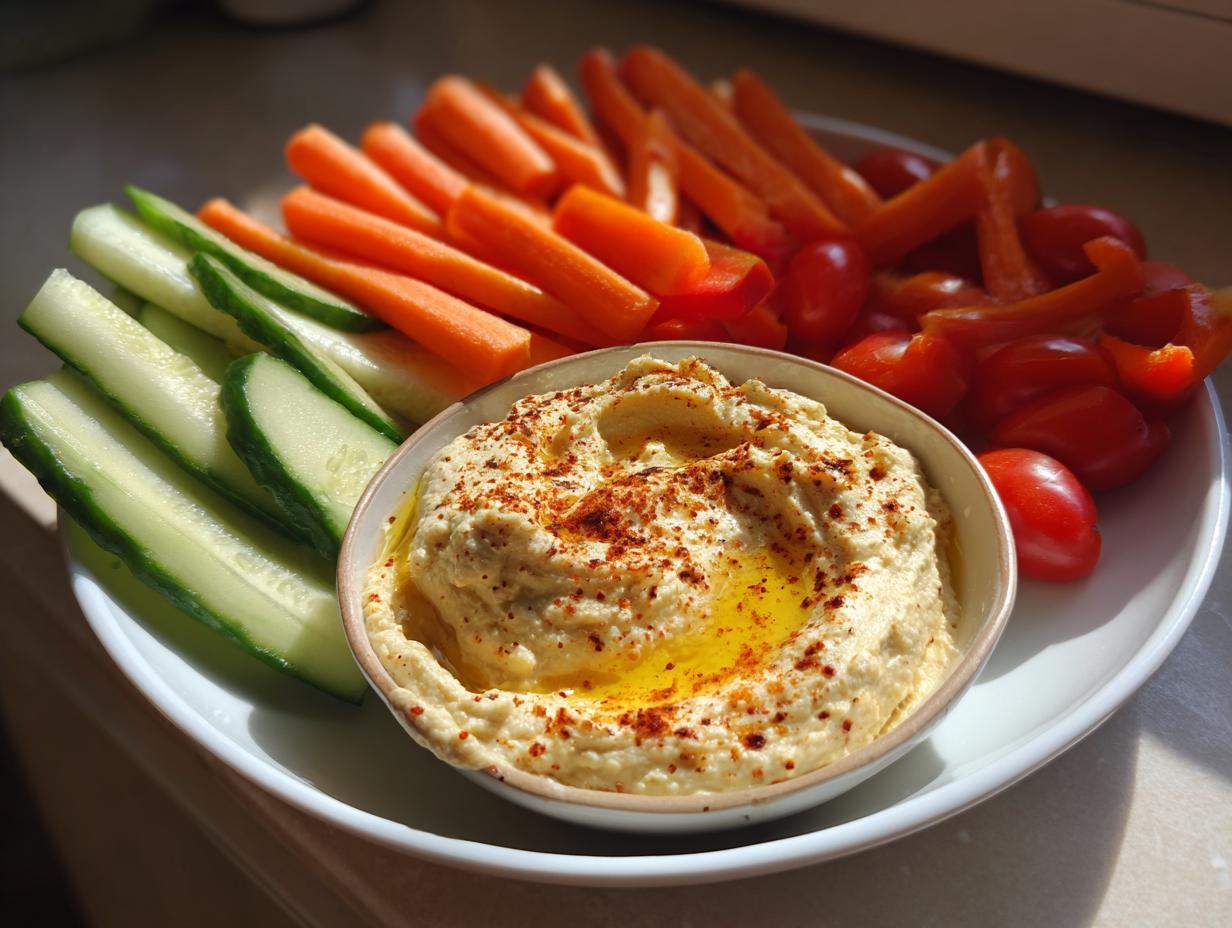
There’s something magical about gathering around the table during Ramadan, especially when you’ve got a platter that’s as vibrant as it is nourishing. My hummus and veggie platter has become a staple in our home—whether it’s for suhoor to keep us going through the day or as a refreshing starter at iftar. It’s light, packed with flavor, and takes barely any time to throw together. I remember the first time I served it to my cousins last Ramadan—they couldn’t believe how something so simple could taste so good. Now, it’s our go-to when we need something quick, healthy, and utterly satisfying. Trust me, once you try this combo, you’ll want to make it all month long!
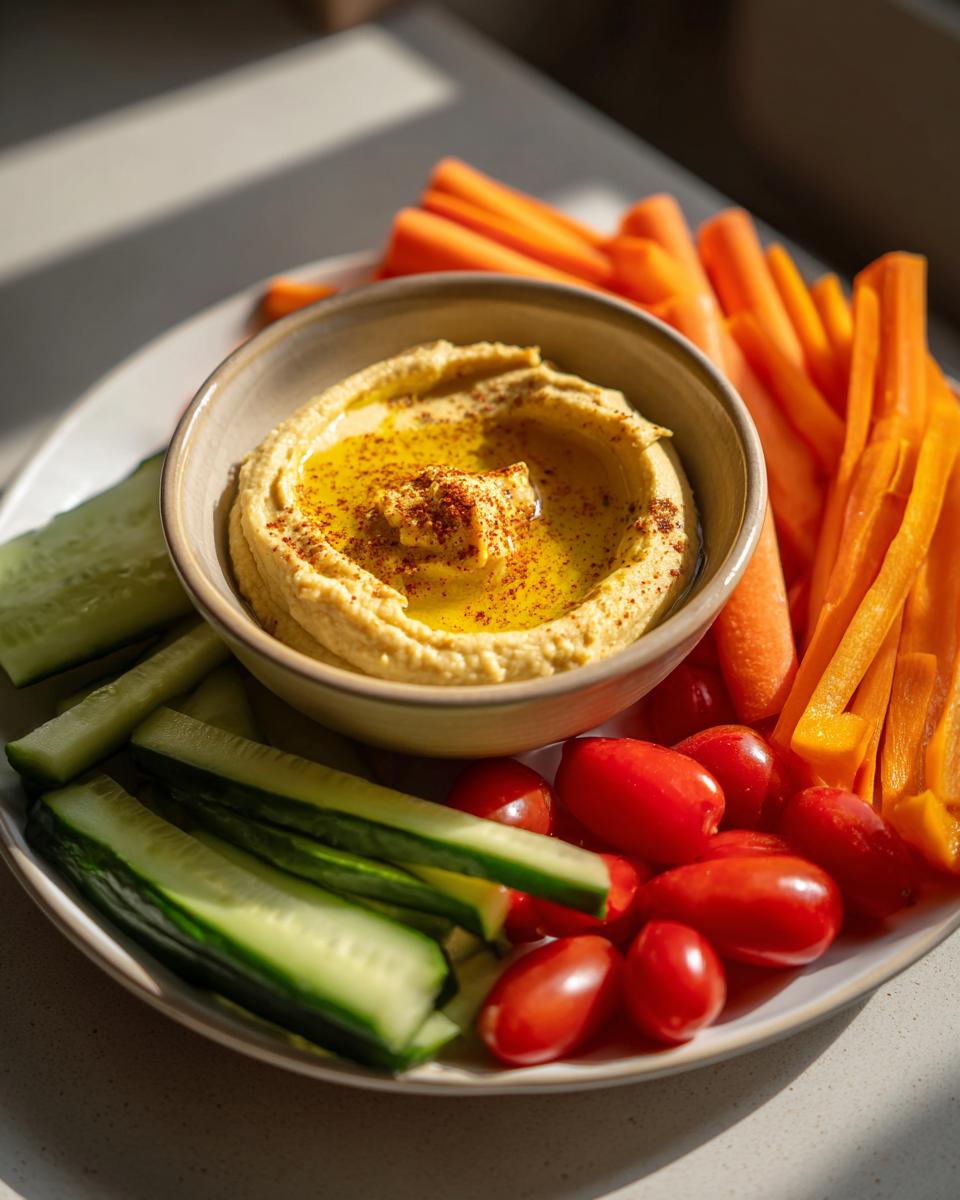
Why You’ll Love This Hummus and Veggie Platter for Ramadan
Here’s the thing—this platter isn’t just pretty (though, yes, those colors pop!). It’s practically designed for Ramadan in every way:
- Light yet filling: The chickpeas pack protein to keep you full without weighing you down, and the veggies add crunch and hydration—perfect for those long fasting hours.
- Ready in 15 minutes: No cooking required! Just blend, chop, and arrange. (I’ve literally made it half-asleep during suhoor.)
- Endlessly adaptable: Swap in whatever veggies you have—radishes, celery, even apple slices work. No tahini? Almond butter adds a fun twist.
Plus, that creamy hummus with a drizzle of olive oil? Pure comfort food, but the kind that actually *fuels* you. My family polishes off the platter every time—sometimes before we even get to the main course!
Ingredients for Your Hummus and Veggie Platter
Let’s talk ingredients—because the magic of this platter starts with what you toss into your food processor and pile onto that plate. I’ve learned over the years that a few simple, fresh things make all the difference. Here’s exactly what you’ll need:
For the Hummus
- 1 can chickpeas (drained and rinsed—save that aquafaba for another recipe!)
- 2 tbsp tahini (the good stuff, stirred well if it’s separated)
- 2 tbsp lemon juice (freshly squeezed, please—bottled just doesn’t hit the same)
- 1 clove garlic (minced fine—or more if you’re feeling bold)
- 2 tbsp olive oil (plus extra for drizzling later)
- ½ tsp salt (I use sea salt, but whatever’s in your shaker works)
- 2 tbsp water (to get that creamy texture just right)
For the Veggie Platter
- 1 cup carrots (sliced into sticks—no need to peel if they’re fresh)
- 1 cup cucumber (I prefer Persian cucumbers for their crispness)
- 1 cup bell peppers (any color—mix ’em up for a rainbow effect)
- 1 cup cherry tomatoes (leave them whole or halve if they’re large)
Ingredient Notes and Substitutions
No tahini? Try almond butter—it adds a nutty depth that’s surprisingly delicious. Out of fresh garlic? A pinch of garlic powder works in a pinch (start with ¼ tsp). For extra-smooth hummus, peel the chickpeas (yes, it’s tedious, but worth it for special occasions!). And those veggies? Swap in whatever’s seasonal—radishes, snap peas, even jicama sticks for extra crunch. The platter’s your canvas!
How to Make Hummus and Veggie Platter for Ramadan
Okay, let’s get into it—this platter comes together so fast, you’ll barely believe it! Here’s my foolproof method for making the creamiest hummus and crunchiest veggie combo:
- Blitz the hummus: Toss the chickpeas, tahini, lemon juice, garlic, olive oil, and salt into your food processor. Pulse a few times to break things up, then crank it up to high. Blend for about 2 minutes, scraping down the sides once. Now, here’s the secret—add water *one tablespoon at a time* while the processor runs until it’s silky smooth. (Too thick? Add a splash more. Too thin? Oops—toss in a handful more chickpeas!)
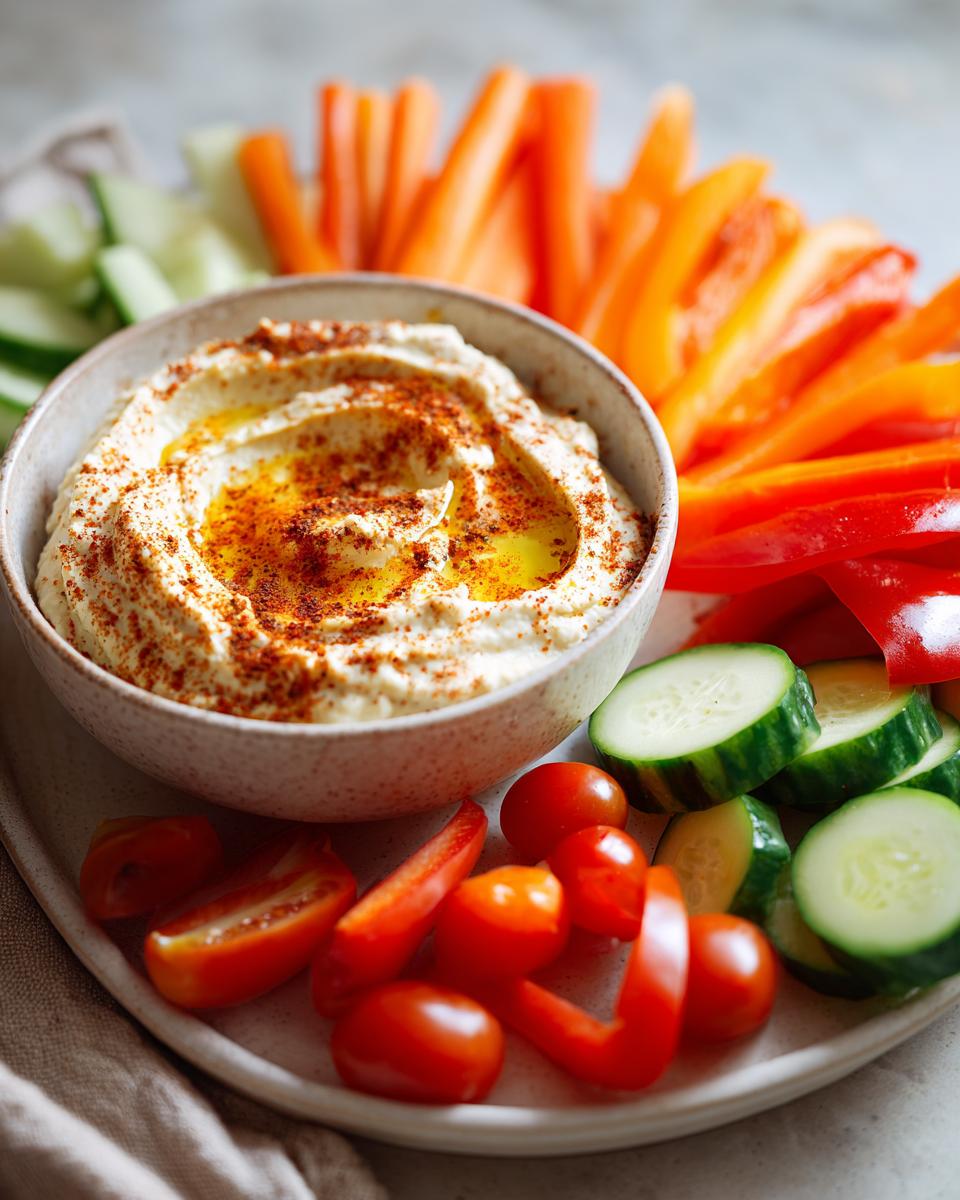
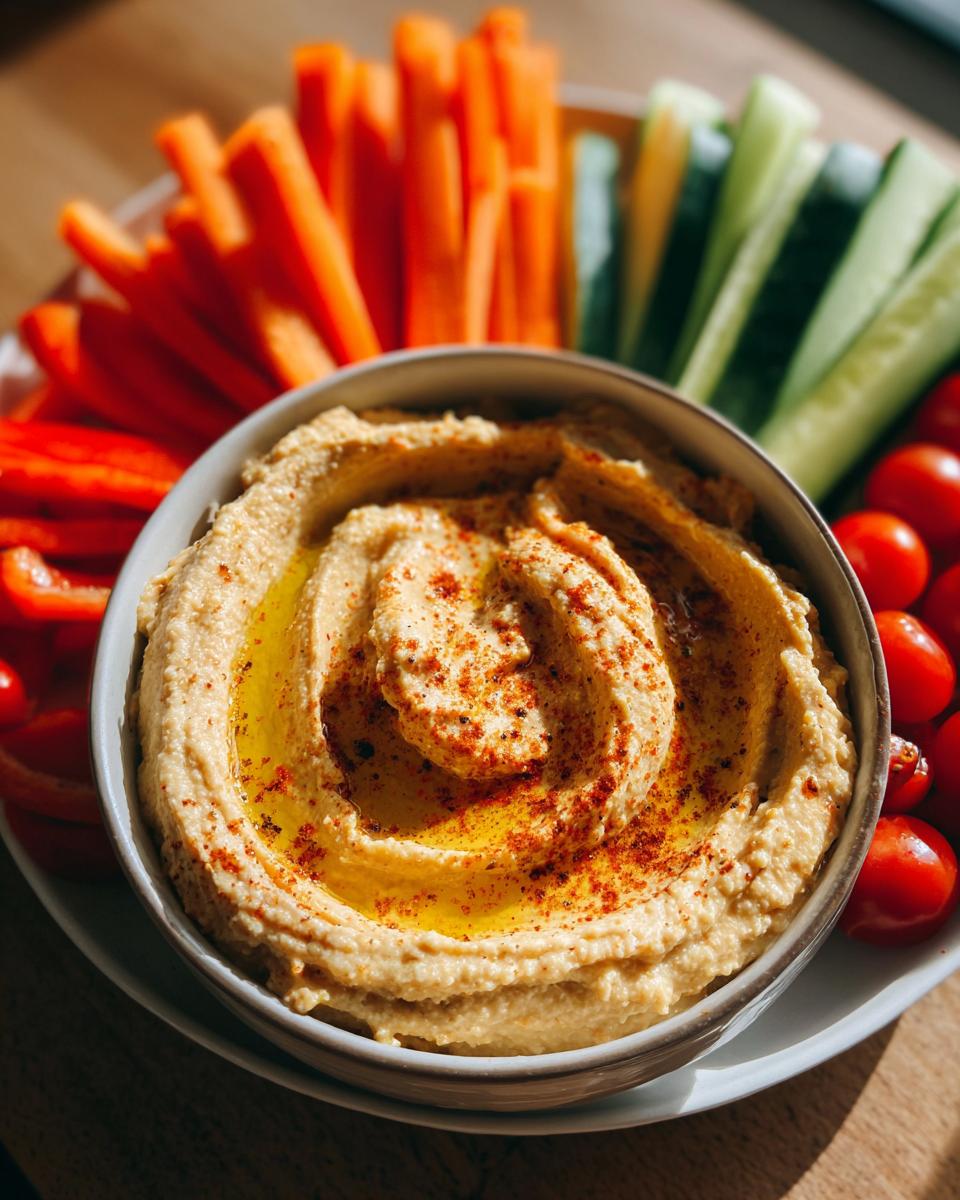
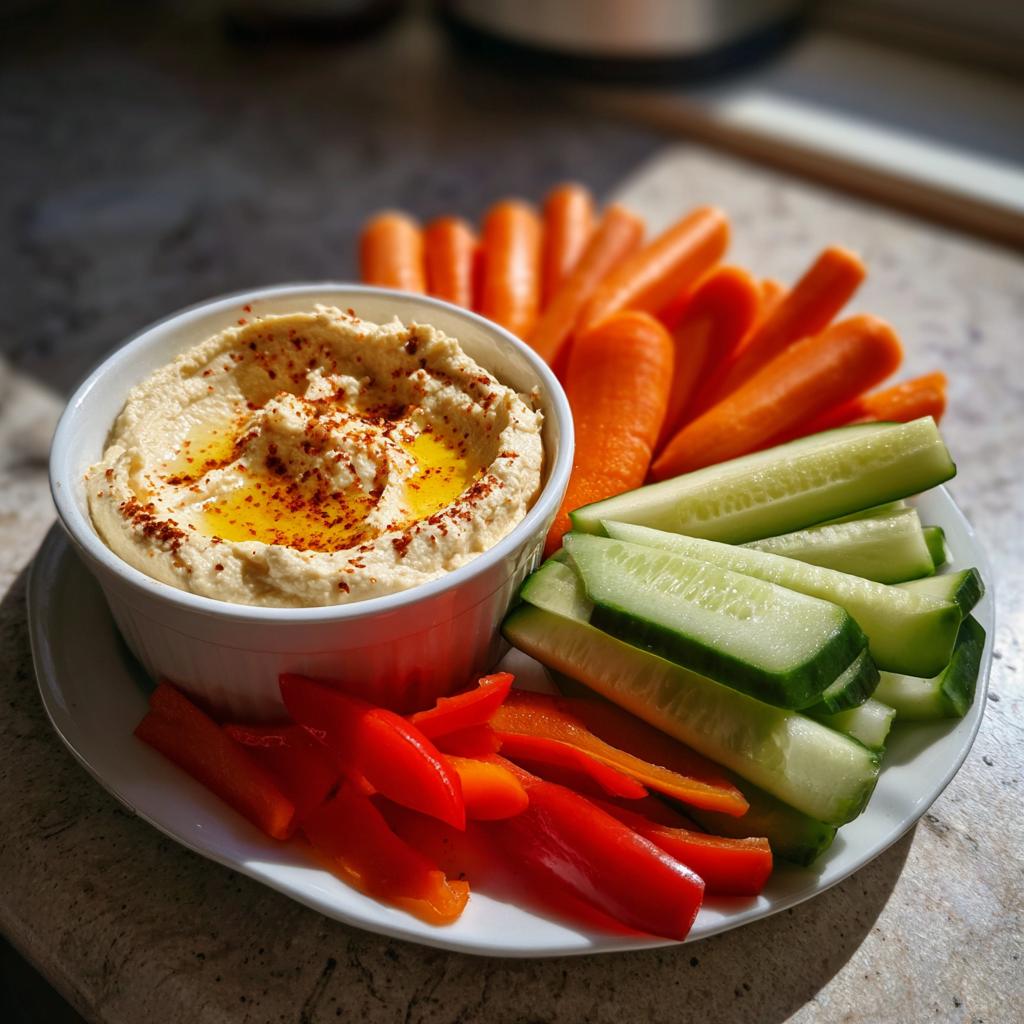
- Plate it pretty: Scoop the hummus into a shallow bowl—use the back of a spoon to make those swoopy swirls. Drizzle with a little extra olive oil (a must!) and maybe a pinch of paprika if you’re feeling fancy. Pop it in the center of your biggest platter.
- Arrange the veggies: Fan out the carrot sticks in one section, cucumber slices in another, and so on. I like to group colors together—red peppers here, green there—for that Instagram-worthy look. Tuck in a few sprigs of parsley or mint if you’ve got ’em. Boom—done!
Pair this with warm pita bread (I’ve got a killer chicken bowl recipe if you want to turn it into a full meal) and watch it disappear. Seriously, my family attacks this platter like seagulls on chips at the beach!
Pro Tips for Perfect Hummus
Want next-level hummus? Chill it for 30 minutes before serving—the flavors meld and the texture gets even creamier. And here’s my weird trick: save a few whole chickpeas to sprinkle on top for texture contrast. Oh, and if your garlic’s too sharp? Roast the clove first—just wrap it in foil and pop it in the toaster oven for 10 minutes. Game changer!
Serving Suggestions for Your Ramadan Platter
Now, let’s talk about making this platter *shine* on your Ramadan table! First things first—warm pita bread is non-negotiable. Tear it into wedges and pile it right next to that hummus for dipping heaven. I also love adding a handful of briny olives or even some stuffed grape leaves if I’m feeling extra. Presentation tip? Drizzle that hummus with your fanciest olive oil and sprinkle za’atar or smoked paprika on top—it’s like jewelry for food! For a heartier spread, pair it with my roasted veggie quinoa bowl—the tahini dressing ties everything together beautifully. Pro move: Set out small bowls of flaky salt and extra lemon wedges so everyone can customize their bites. Trust me, your guests will hover around this platter all night!
Storage and Make-Ahead Tips
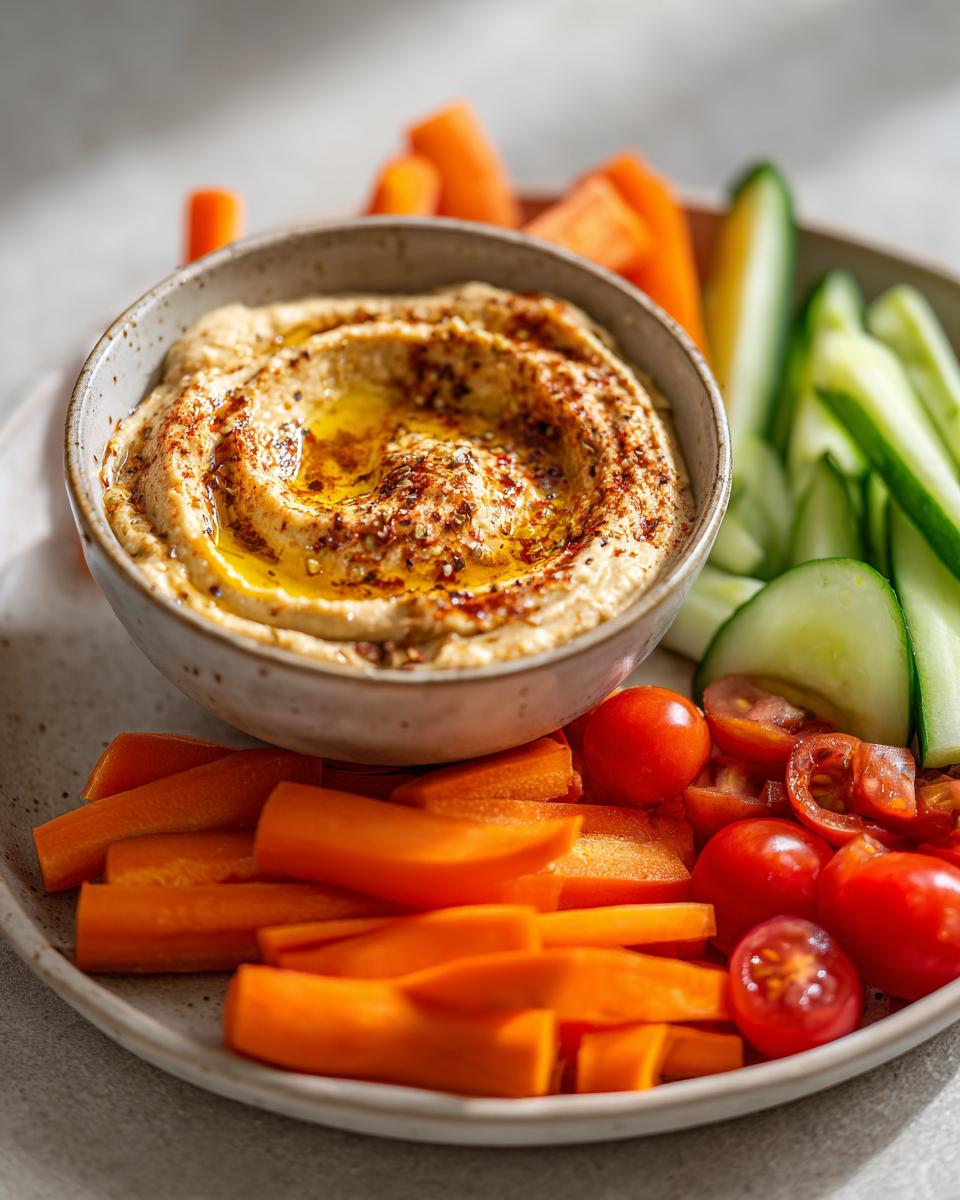
Here’s the good news—this platter is practically made for meal prep! The hummus will keep like a dream in an airtight container in the fridge for up to 3 days (if it even lasts that long—my crew usually demolishes it by day two). Just give it a quick stir before serving, and maybe add a fresh drizzle of olive oil to revive it. Now, for my freezer hack: portion the hummus into small containers (I use ½-cup mason jars) and freeze for up to a month. Thaw overnight in the fridge, then whisk in a teaspoon of warm water to bring back that creamy texture. The veggies? Best sliced fresh daily, but you can prep carrots and bell peppers 1 day ahead—just store them in water in the fridge to keep ’em crisp. Game changer for those busy Ramadan nights!
Nutritional Information
One serving of this hummus and veggie platter packs about 150 calories, with 8g of healthy fats (mostly from that glorious olive oil and tahini), 5g of plant-based protein, and 15g of carbs to keep your energy steady. You’re also getting a solid 4g of fiber—perfect for staying full during those long fasting hours. Of course, these numbers can wiggle a bit depending on your exact ingredients (like how generous you are with that olive oil drizzle!). But hey, when something tastes this good and fuels you this well, who’s counting?
FAQs About Hummus and Veggie Platter for Ramadan
Can I use canned veggies for the platter?
Oh honey, I wouldn’t recommend it—fresh is best here! Canned veggies get mushy and lose that satisfying crunch. But if you’re in a pinch, try jarred roasted red peppers (just pat them dry first). The hummus itself uses canned chickpeas, though, so no shame there!
How long does homemade hummus last?
In our house? Maybe 20 minutes—ha! But seriously, it’ll keep beautifully in the fridge for 3-4 days in an airtight container. Just give it a stir and maybe add a splash of water if it thickens up. That olive oil drizzle on top acts like a natural preservative too!
What if I don’t have tahini?
No tahini, no problem! Almond butter works in a pinch (use half the amount—it’s stronger!). Or skip it entirely—just add an extra tbsp of olive oil and a sprinkle of sesame seeds for flavor. My aunt makes hers with Greek yogurt sometimes—totally untraditional but crazy creamy!
Can I make this platter ahead for iftar?
Absolutely! Prep the hummus up to 2 days early (it actually tastes better after chilling). Chop sturdy veggies like carrots and peppers the night before—store them in water in the fridge to stay crisp. But leave delicate stuff like cucumbers and tomatoes for last-minute slicing. Assemble everything an hour before serving for maximum freshness!
Hummus and Veggie Platter
Ingredients
Equipment
Method
- In a food processor, combine chickpeas, tahini, lemon juice, garlic, olive oil, salt, and water.
- Blend until smooth, adding more water if needed to reach desired consistency.
- Transfer the hummus to a serving bowl and drizzle with olive oil.
- Arrange sliced carrots, cucumber, bell peppers, and cherry tomatoes around the hummus on a platter.